How Abu Dhabi money reshaped Manchester, and the questions it now raises for Andy Burnham
A Guardian analysis finds land and property held by the UAE government or Emirati developers in Manchester grew sharply over the past decade, prompting scrutiny of council deals and of Burnham's own dealings with Manchester City's owners.
By Newz Commentary Staff ·
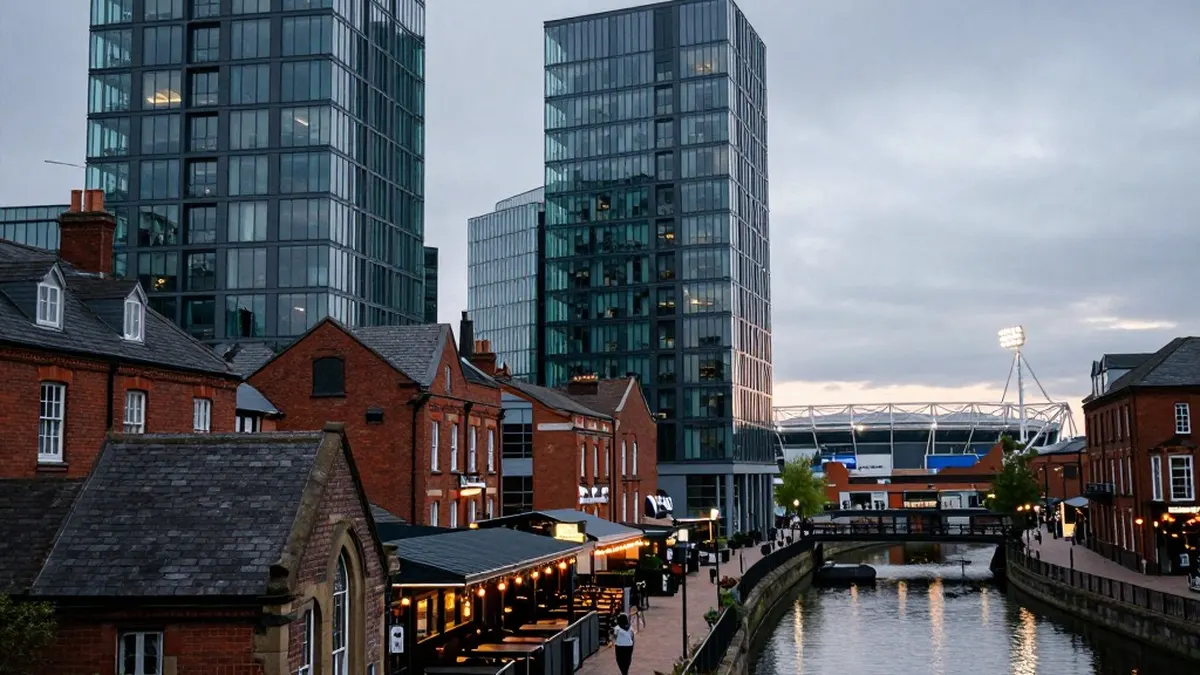
A Guardian analysis has found a stark rise over the past decade in the land and property in Manchester owned by the UAE government or Emirati developers. At its peak in 2023, the holdings covered an area equal to 260 football pitches. Sheikh Mansour bin Zayed al-Nahyan, the owner of Manchester City, has built a large portfolio beyond the club. It includes the UK's biggest indoor arena, a hotel that opened last month, several apartment blocks and a stake in university research through a firm run by City chief executive Khaldoon al-Mubarak.
The story traces back to the Arab spring. After Hosni Mubarak fell in 2011, he was succeeded by Mohamed Morsi of the Muslim Brotherhood, whom UAE rulers viewed as an enemy. The emirates warned David Cameron's government it could pull billion-pound arms deals if Britain did not act more firmly on the Brotherhood. A secret Whitehall unit was set up to keep the UAE on side, and investment deals were offered in private meetings. In summer 2013, Manchester city council was asked to draw up three investment proposals. One became Manchester Life, a £1bn scheme in which the council sold a prime piece of city centre land to Abu Dhabi for £5m, to build 6,000 homes, with a right of first refusal on other projects.
Richard Leese, then council leader, said the deal was brokered by the UK government and that housing development near the centre had stalled for years, with no other developers willing or able to act. Delivery has fallen short. Manchester Life has built 2,039 homes, a third of the promise, and other developers have added 2,839, for a total of 4,878, nearly 20% below the 6,000 envisaged. Council policy calls for at least 20% social and affordable housing, but only 8% of the new homes qualify, and none came from Manchester Life.
Nearby, the contrast is visible. Within half a mile of the Abu Dhabi-funded apartments there are four charity food banks or distribution sites. Mark Blake, chief executive of Manchester Central Foodbank, said the shiny development was bound to cause resentment during a cost of living crisis. Alan Good, a Lib Dem councillor, said parking had become a flashpoint and warned Manchester was turning into a "northern version of London", with 20,000 people on the social housing register.
Burnham faces awkward questions of their own. In 2016 they criticised Greater Manchester combined authority loans to large firms and luxury schemes. In 2017, as mayor, they signed off a £55m loan to Jersey-registered property firms owned by Sheikh Mansour. The authority says its loans fund was open to all qualifying developers and that the loan was repaid in full, but councillors on its scrutiny committee are now investigating. Weeks before the loans were approved, Burnham enjoyed hospitality from City's owners, a meeting that only came to light last week. The prime minister had said there was one significant meeting with club bosses, in 2021, but five more have emerged. Burnham said they want "full transparency".
Secrecy has also been an issue. A 10-year collaboration agreement signed in December 2015 gave Abu Dhabi first refusal on land near the centre, and a clause barred the council's elected politicians from announcing the deal without written approval from Sheikh Mansour's firm. The council called it a standard agreement. The property is now worth an estimated £350m and is owned through Jersey subsidiaries. The council says it has received nearly £3m from an undisclosed profit-sharing arrangement and £17.6m in council tax. Leese denied the deal escaped scrutiny and said of the city's partnerships: "That's the way the city works." One former senior officer described the culture as "Kremlin-like". University of Sheffield researchers concluded the council had "sold the family silver too cheaply", a claim the council strongly denies.
A second deal drew further doubts. In 2017 the council paid £42m for a retail park next to the Manchester Life site, at least six times the per-acre price Sheikh Mansour paid. It was later tipped as a home for No 10 North, though those plans were quietly shelved in October. Property officer Dominic Hayes resigned in March 2018 over concerns about the deals, and an internal investigation found another senior employee believed the council had overpaid. Eddie Smith, a senior council figure accused of warning that criticising the club relationship would be career-limiting, denies making the comment.
Bev Craig, who became council leader in December 2021, ordered a review of Manchester Life and says it found everything was legal and above board. A July review found "significant benefits" from such deals but also weaknesses in documentation, monitoring and assurance, especially around profit sharing. Prof Jonathan Silver of the University of Sheffield said the growing Emirati buy-up raises "major concerns about the fragility of the 'Manchester model'" and its reliance on international finance.
Source: The Guardian